Liquidity Mechanics and What the Numbers Reveal for Small‑Cap Tokens
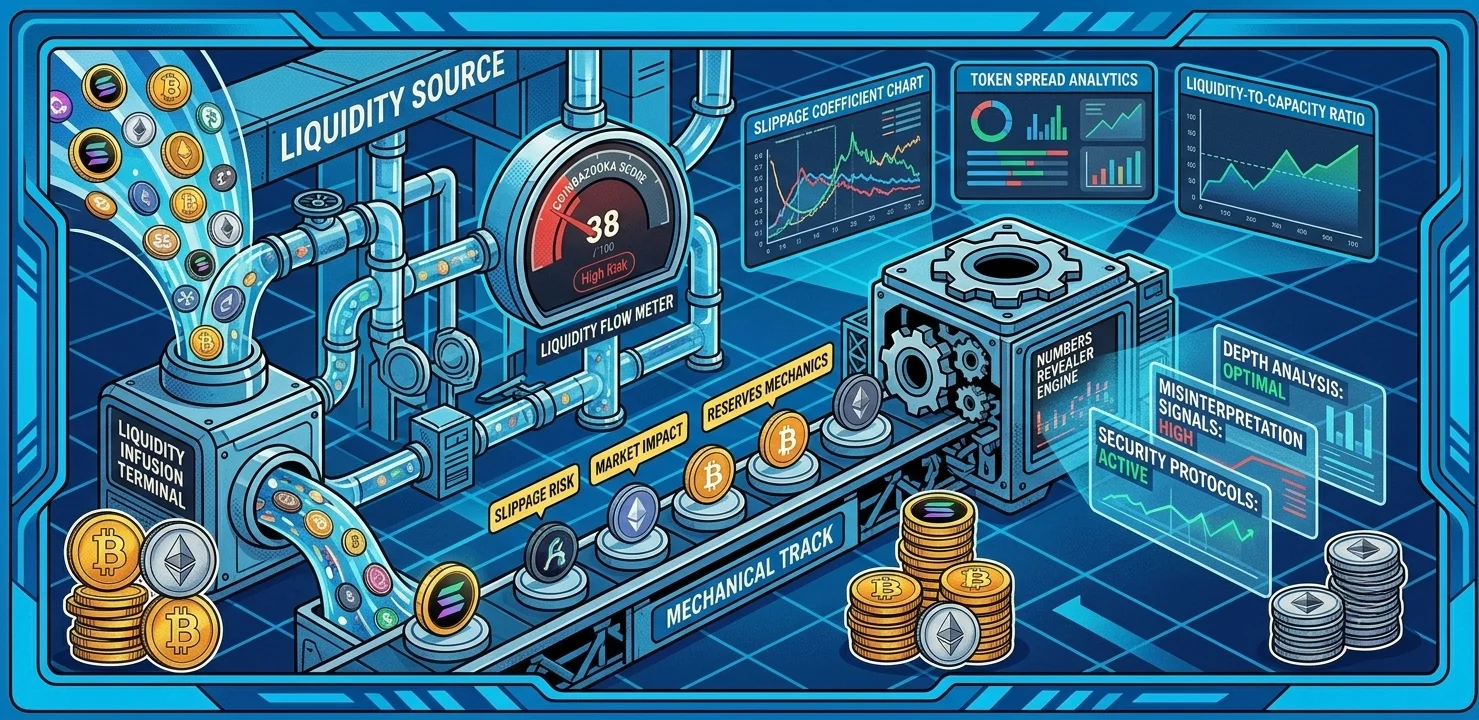
LAB announced an $11 million token burn and saw its price jump 24 percent. The next hurdle is a 46 million token unlock that could flood the market. The headline raises a durable question: how much real liquidity sits behind a token’s price, and can it absorb a large sell‑off?
Liquidity isn’t a marketing buzzword; it’s a contract‑level property that determines how many tokens can be swapped without moving the price dramatically. For traders who hop on a token minutes after launch, the depth of the pool can mean the difference between a smooth exit and a price crash.
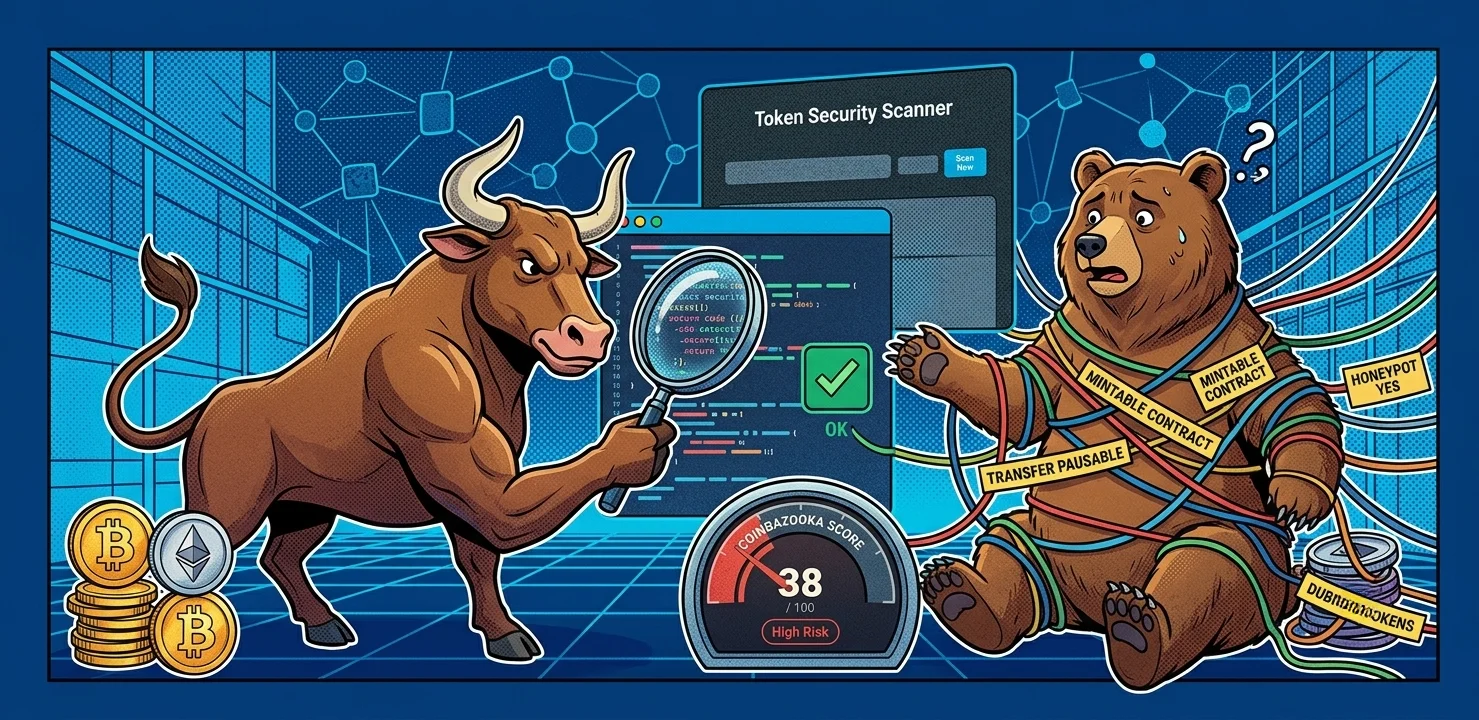
CoinBazooka’s scanner has pulled live pool data from thousands of contracts on BNB Chain, Ethereum‑compatible chains, and Solana. By looking at the raw numbers, you can see how liquidity is actually distributed across the ecosystem, and where blind spots remain.
How liquidity is encoded in a pool contract
On EVM chains, an automated market maker (AMM) pool is a separate smart contract that holds two token balances. The contract’s bytecode enforces the constant‑product formula x·y = k, where x and y are the reserves. When a trader swaps, the contract updates the reserves and mints a tiny fee to the liquidity providers (LPs). LPs deposit equal‑value amounts of each token and receive pool‑share tokens that represent their claim on the reserves.
The benefit goes to LPs, who earn a fraction of each trade as a fee. The cost falls on traders who must accept price impact – the larger the trade relative to the pool, the more the price moves. Because the pool contract does not lock the funds by default, any LP can withdraw their share at any time, draining the pool unless the token’s developers add a lock‑up mechanism.
Live pool data: how many tokens actually have liquidity
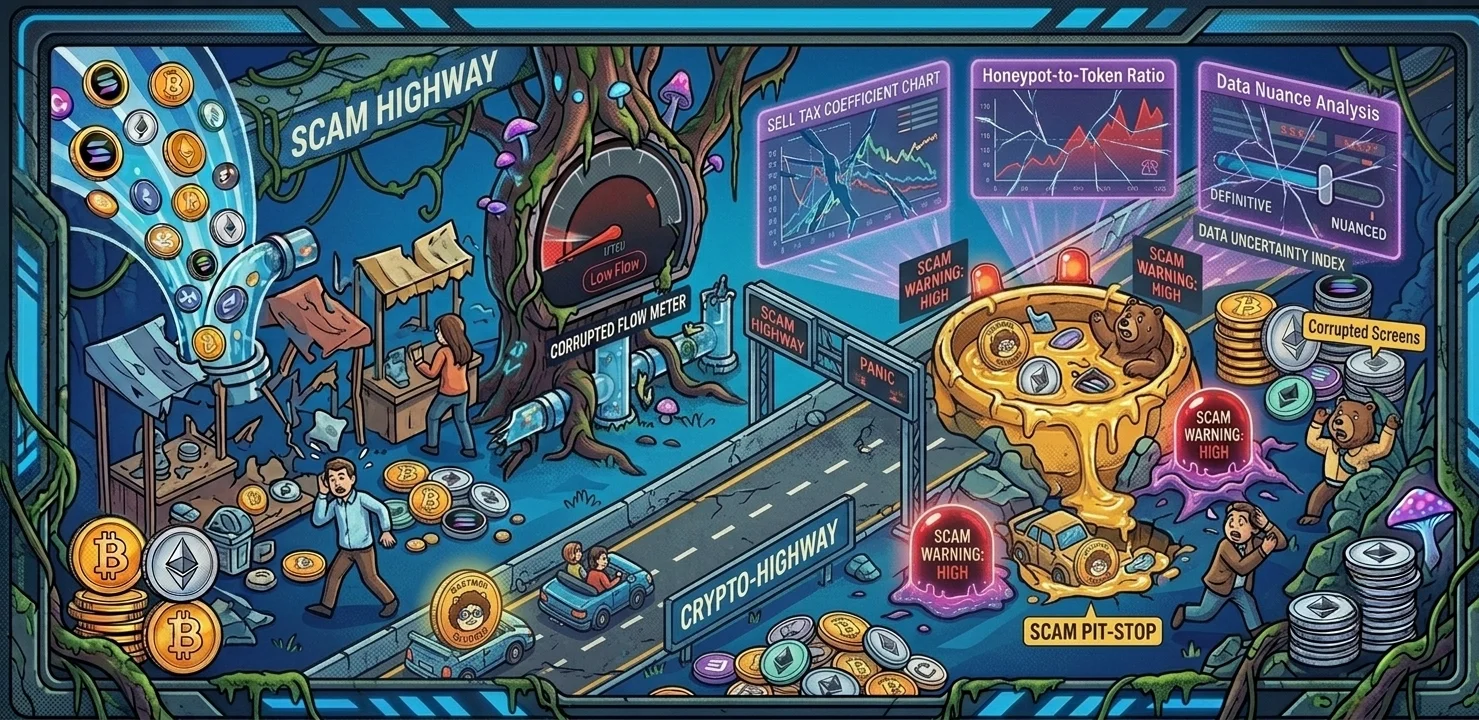
Our scanner reported that 1,578 tokens returned live pool data from a decentralized exchange within the last 48 hours. Another 4,307 of the 9,522 tracked tokens have never returned pool data at all, and the database cannot distinguish a token whose pair was removed from one that never had a tracked pair.
Among the 1,578 live tokens, 14.4 percent hold under $1,000 of liquidity. That means roughly 227 tokens sit on a pool that would be exhausted by a modest purchase. The data also shows that 17.3 percent of the 1,571 live tokens hold less than 5 percent of their market capitalisation as pool liquidity, indicating a thin safety net for price swings.
The platform cannot tell us why a token lacks pool data – it may never have been listed, or the pair could have been removed after an earlier launch.
Liquidity versus market capitalisation
For tokens with a market cap above $10,000, the ratio of pool liquidity to market capitalisation spreads widely. The bottom quarter of 1,018 live tokens sit below an 8.4 percent ratio, the median is 32.6 percent, and the top quarter exceed 71.1 percent. A single median would hide that spread.
A low ratio means a small amount of capital backs the entire market value, so a single large sell could depress the price sharply. A high ratio suggests the pool can absorb larger trades before price impact becomes severe. Traders should compare the ratio to their intended trade size: if you plan to sell a few thousand dollars worth of a token that sits at the 8 percent quartile, the price could shift dramatically.
Solana’s liquidity signals: lock status and authority
Solana’s SPL token standard does not include a built‑in transfer tax, so the classic honeypot check does not apply. Instead, two on‑chain signals matter. First, whether the liquidity pool has been locked or burned; a locked pool prevents the deployer from withdrawing the reserve tokens, while a burned pool means the authority to move the liquidity no longer exists.
Second, the status of mint authority and freeze authority. If the mint authority remains active, the creator can mint additional tokens at will, diluting existing holders. If the freeze authority is not revoked, the creator can freeze accounts and effectively halt trading. Because CoinBazooka does not currently record lock status or authority revocation, those signals remain outside the numeric analysis.
What small‑cap traders should watch
When you spot a fresh token on Ethereum, BNB Chain or another EVM‑compatible chain, start by checking the pool’s reserve size. If the live pool data shows under $1,000 of liquidity, treat any sizable trade as high‑risk. Look at the liquidity‑to‑market‑cap ratio; a figure below 10 percent signals that the market price rests on a thin pool.
On Solana, verify whether the liquidity has been locked or burned and whether the mint and freeze authorities have been revoked. Those actions are the primary on‑chain safeguards against sudden supply expansion or liquidity withdrawal.
Finally, remember that the data set cannot reveal the intent behind a missing pool, nor can it capture off‑chain agreements that might affect token supply. Use the on‑chain numbers as a starting point, not a guarantee.
CoinBazooka scans contract properties, not intent. A contract that passes every check can still lose value, and a contract that fails one can still be legitimate. Nothing here is financial advice.